
Have you ever walked into a bedroom and immediately felt your shoulders drop and your breath deepen? Or conversely, have you entered a room that, despite being clean, felt chaotic, heavy, or unsettling? That unseen “vibe” is the flow of energy in the room, not just something you’re thinking about.
In 2026, as our lives become increasingly digital and fast-paced, the sanctity of the bedroom has never been more critical. We aren’t just searching for a place to crash; we are looking for a sanctuary that actively restores us. This is where the ancient art of Feng Shui meets modern interior design. It’s not just about moving furniture; it’s about spatial acupuncture.
If you’ve been struggling with insomnia, restless anxiety, or a feeling of stagnation in your personal life, the culprit might be your room arrangement. Achieving a positive energy placement Feng Shui Bedroom is one of the most effective ways to reset your circadian rhythm and invite harmony back into your life. We will move past the superstition and focus on the practical, architectural logic of energy flow. We’ll cover everything from the crucial Feng Shui bedroom layout to handling small spaces and even tackle modern problems like electronics.
Ahead, you will find 20 non-negotiable rules, detailed layout examples, and a manual generator guide to help you design your dream sanctuary. Whether you are looking to upgrade your modern bed frames or simply rearrange what you have, this guide is your roadmap to better rest.
Let’s create a space that feels as inviting as it looks.
What Is Feng Shui Bedroom & Why Positive Energy Placement Matters
Before we start dragging dressers across the floor, let’s establish the “why.” Feng Shui (pronounced “fung shway”) translates literally to “wind” and “water.” In Chinese philosophy, these are the two natural elements that flow, move, and circulate life energy, known as Chi (or Qi).
A feng shui bedroom is not a specific style like “Mid-Century Modern” or “Bohemian.” You can have a minimalist Scandinavian room or a maximalist Victorian room that both adhere to Feng Shui principles. Instead, it is a system of laws that governs spatial arrangement and orientation in relation to the flow of energy.
The “Good” vs. The “Bad”
When we talk about a positive energy placement feng shui bedroom, we are talking about creating an environment where Chi can meander gently.
- Good Feng Shui Bedroom: The air feels fresh, movement is unobstructed, and you feel subconsciously safe and supported. This promotes restorative sleep, intimacy, and health.
- Bad Feng Shui Bedroom: This often involves “Sha Chi” (attacking or stagnant energy). This occurs when energy rushes too fast (like a wind tunnel), gets blocked by clutter, or is pierced by sharp angles (“poison arrows”).
Why It Matters for Your Health
From a modern psychological and physiological perspective, Feng Shui principles align closely with what sleep experts call “sleep hygiene.”
When your bed is in a vulnerable position, your primitive brain (the amygdala) stays on high alert for threats, preventing you from entering deep REM sleep. By utilizing proper feng shui bed placement, you signal to your nervous system that you are safe. This lowers cortisol levels and boosts melatonin production.
Note: We aren’t just arranging furniture; we are arranging your mindset. A room with positive flow promotes a clear and relaxed state of mind.
20 Essential Feng Shui Bedroom Rules for Positive Energy
If you only have time to change a few things, start here. These are the 20 foundational feng shui bedroom rules that experts and interior designers swear by for 2026.
1. The Commanding Position (The Golden Rule)
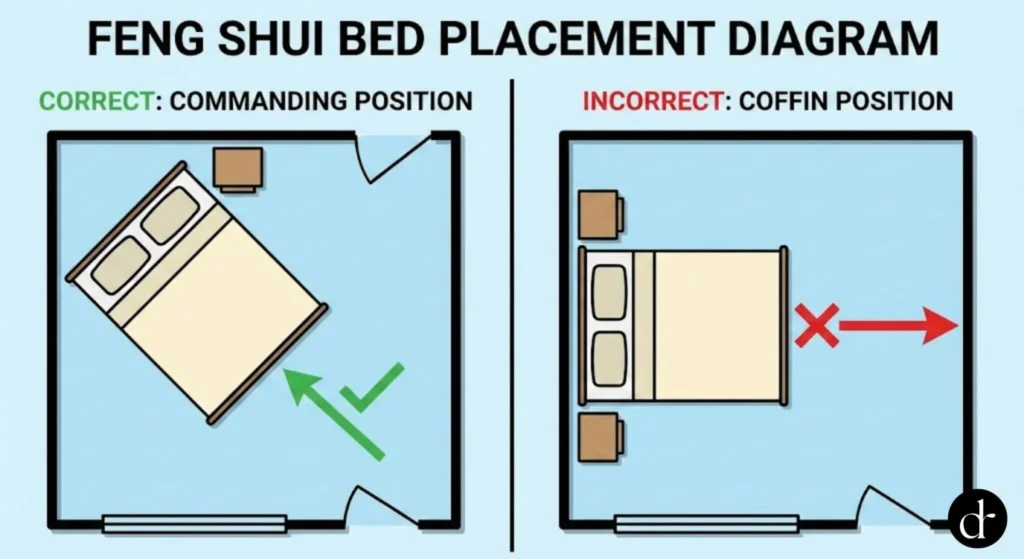
This concept is the single most important aspect of feng shui bed positioning. Your bed must be placed so you can see the door, but not directly in line with it.
- Why: When you can see the entrance, you have visual control over your space, which reduces subconscious anxiety. Being directly in line with the door (the “coffin position”) exposes you to too much rushing energy.
- Visual Tip: If your room layout forces you to have the bed on the same wall as the door, use a mirror placed strategically to reflect the door so you can see it from bed
2. Solid Headboard Against a Solid Wall
In bed feng shui, your headboard represents stability and support in life. You want a solid wall behind you, not a window and not the middle of the room.
- Why: A floating bed leaves you feeling unmoored. A solid wall provides a psychological “mountain” of support at your back.
- Action Step: Avoid metal bars or open-slat headboards. Opt for an upholstered headboard to create a feeling of protection.
3. No Mirrors Facing the Bed
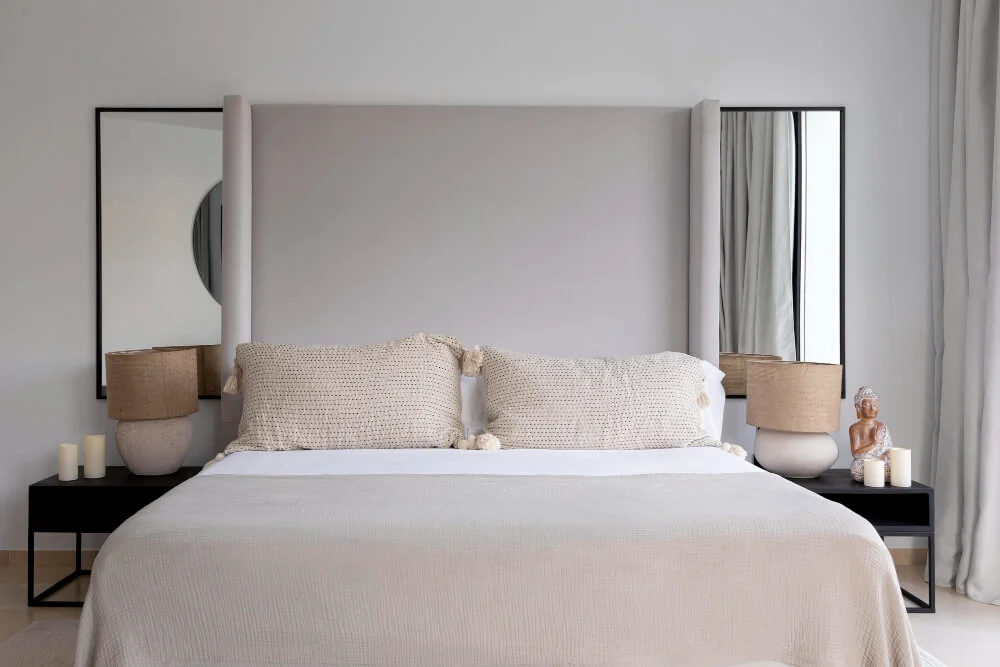
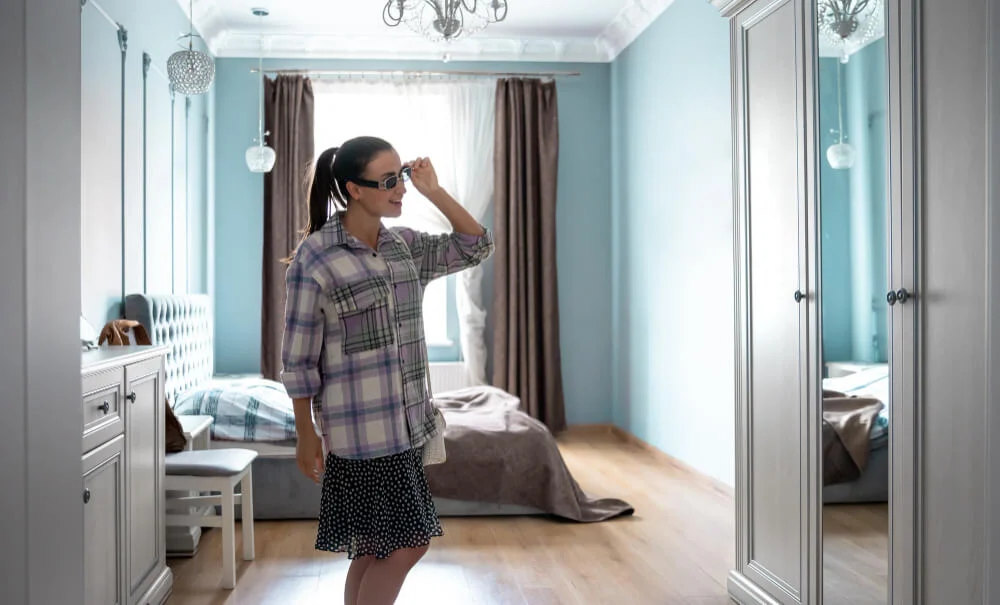
One of the most debated topics is the feng shui mirror bedroom rule. The consensus? Do not hang a mirror where you can see yourself while lying in bed.
- Why: Mirrors are active energy. They bounce light and movement around the room. If you are trying to wind down, a mirror facing you reflects your energy back at you, doubling the activity and causing restlessness.
- Try This: If you have mirrored closet doors, cover them with drapes at night or angle a standing mirror away from the bed.
4. Declutter Under the Bed
Your bed is for sleeping, not for storing old tax returns or shoes.
- Why: Chi needs to circulate around your body while you sleep, including underneath you. Stuffing the space under the bed blocks this flow and creates bad feng shui bedroom energy. Subconsciously, sleeping on top of “clutter” can lead to disturbed dreams.
- Action Step: Clear it out entirely. If you have a small apartment and must use storage, stick to soft items like spare linens or pillows only.
![Comparison of a cluttered under-bed space versus a clean, airy space under the frame]](https://dwellingroom.com/wp-content/uploads/2025/12/Comparison-of-a-cluttered-under-bed-space-versus-a-clean-airy-space-under-the-frame-1024x572.webp)
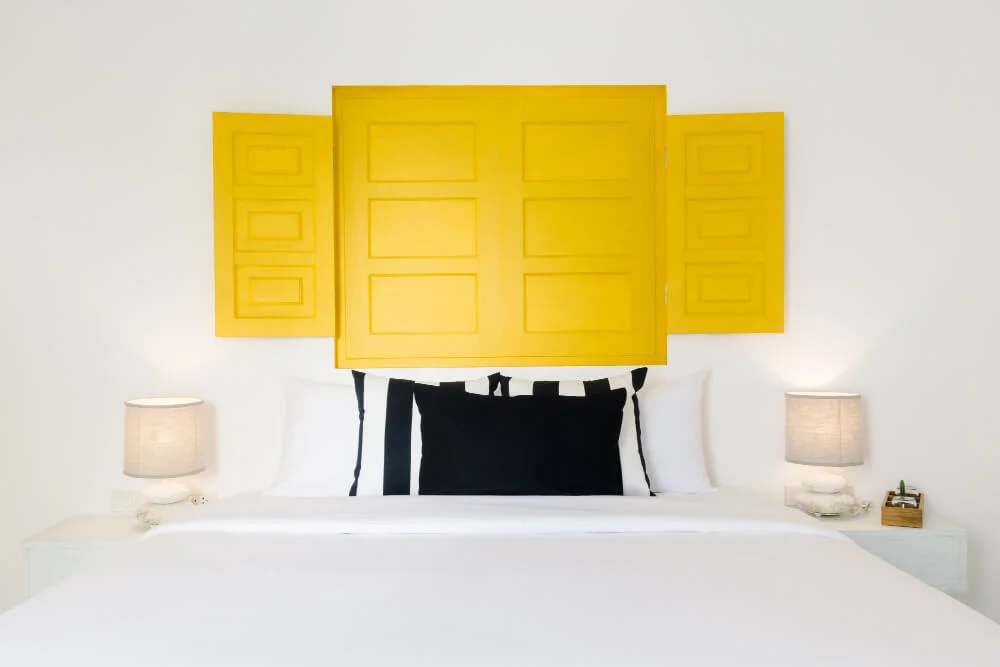
5. Symmetrical Nightstands
Balance is key in a successful bedroom feng shui layout. You should always aim for two nightstands, one on each side, even if you are single.
- Why: Asymmetry creates an imbalance of energy. For couples, it signifies equality. For singles, it creates space for a potential partner.
- Visual Tip: They don’t have to match perfectly (eclectic is fine!), but they should be of similar visual weight and height.
6. Earthy and Skin-Tone Colors
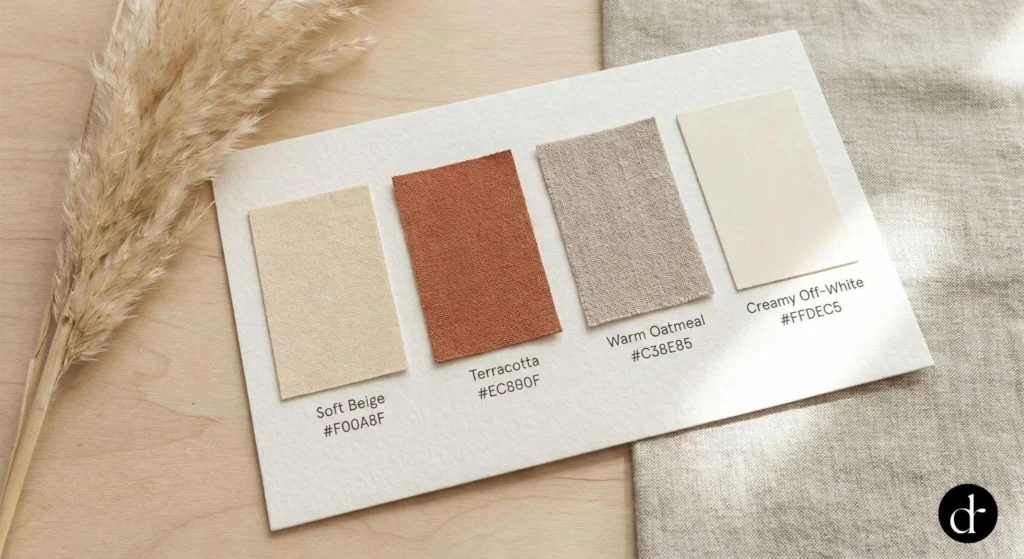
When choosing feng shui bedroom colors, look to skin tones and earth elements.
- Why: Fire reds are too stimulating; cold blues can be too depressing if not balanced. The best colors range from creamy whites and oats to chocolates, peaches, and terracottas. These promote warmth and nourishment.
- Try This: Paint your walls a soft sage or warm beige, and add accents through pillows rather than painting a whole wall bright red.
7. No TV or Electronics
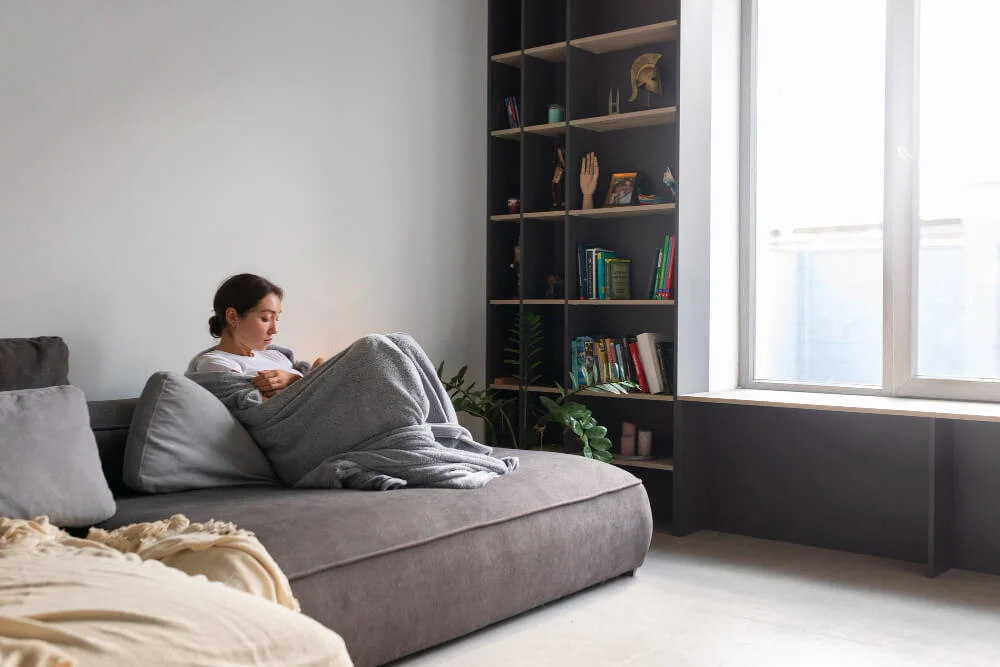
This is a modern rule that is vital for 2026. Ban the TV in the bedroom to stop energy leaks.
- Why: Electronics emit EMFs (electromagnetic fields) and blue light, both of which disrupt sleep cycles. Furthermore, a TV acts like a black mirror when off and a portal to the world’s chaos when on. It kills intimacy and rest.
- Action Step: If you urgently require entertainment, consider a projector that can be hidden away, or stick to reading physical books.
8. Soft Plants (No Cacti)
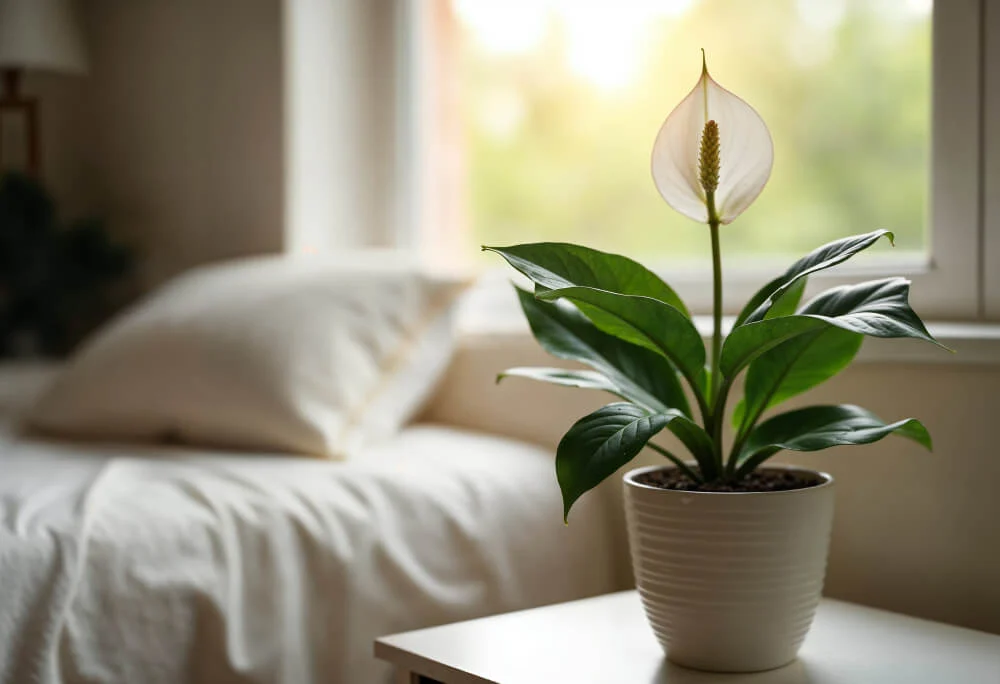
Plants are excellent for improving air quality, but it is important to be selective in order to maintain positive energy and feng shui vibes in the bedroom.
- Why: Sharp, pointy plants like cacti or snake plants have “poison arrow” energy—they are defensive and prickly. You want soft, rounded energy in the bedroom.
- Try This: Opt for a Pothos, a Rubber Plant, or a Peace Lily. Their rounded leaves promote a gentle energy flow.
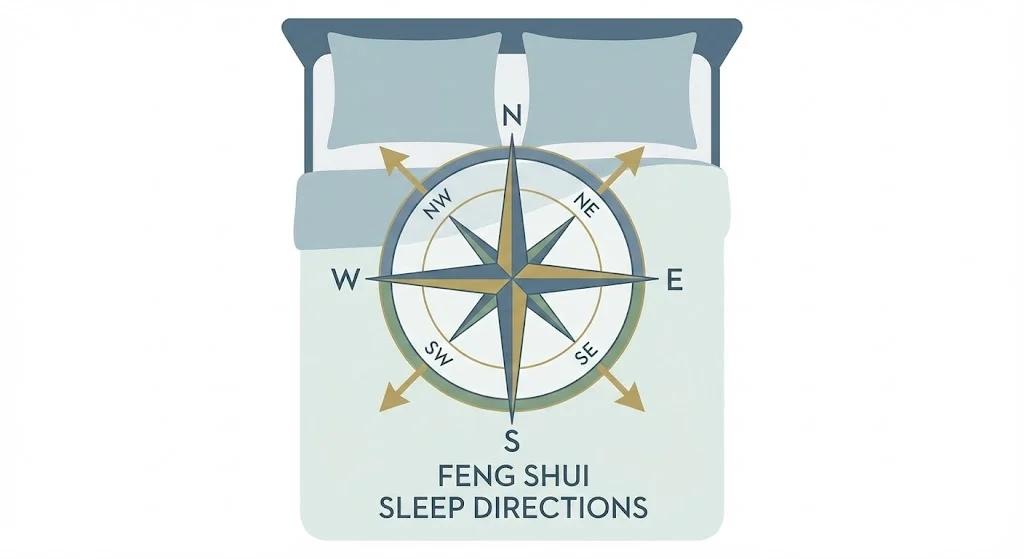
9. Bed Direction Chart by Kua Number
Advanced Feng Shui utilizes the Kua number (based on birth year) to determine your feng shui bed direction chart.
- Why: We are magnetic beings. Aligning your feng shui sleeping head direction with your personal auspicious direction can tap into specific energy for health or prosperity.
- Action Step: Refer to the table below for general guidance based on your specific group.
| Kua Number Group | Best Sleep Direction | Energy Benefit |
| East Group (1, 3, 4, 9) | North | Rest, Healing & Peace |
| East Group (1, 3, 4, 9) | East | Growth & Ambition |
| East Group (1, 3, 4, 9) | South | Fame & Recognition |
| East Group (1, 3, 4, 9) | Southeast | Wealth & Prosperity |
| West Group (2, 5, 6, 7, 8) | Northeast | Stability & Knowledge |
| West Group (2, 5, 6, 7, 8) | Northwest | Mentorship & Travel |
| West Group (2, 5, 6, 7, 8) | West | Creativity & Children |
| West Group (2, 5, 6, 7, 8) | Southwest | Love & Relationships |
10. Avoid Beams Above the Bed
Heavy architectural beams cutting across the ceiling directly over the bed create bad feng shui bedroom pressure.
- Why: They create a visual and energetic pressure that cuts across your body. This can manifest as health issues in the part of the body the beam cuts across (e.g., headaches if over the head).
- Visual Tip: If you can’t move the bed, drape fabric across the beams to soften the visual “blade,” or paint them the same color as the ceiling.
11. Pairs of Decor Items
Similar to the nightstands, think in pairs to support feng shui bedroom rules regarding relationships.
- Why: Pairs represent union and partnership. Even artwork should depict pairs (two birds, two trees) rather than a single lonely figure.
- Try This: Place two matching lamps, two crystals (like rose quartz), or two pieces of wall art side-by-side.
12. No Work/Clutter Near Bed
In a post-2020 world, many of us work from home, but your bedroom should follow strict feng shui rules regarding workspace.
- Why: Work energy is active (Yang); sleep energy is passive (Yin). Mixing them confuses the brain. Seeing your laptop reminds you of deadlines.
- Action Step: If you must have a desk in the bedroom, use a room divider or a folding screen to block the view of the desk while you are in bed.
13. Proper Bed Height
Mattresses directly on the floor are generally considered bad feng shui bedroom practice.
- Why: As mentioned in Rule #4, energy needs to flow under you. Being on the floor also makes you susceptible to drafts and dust.
- Visual Tip: Invest in a bed frame that lifts the mattress at least 18 inches off the ground.
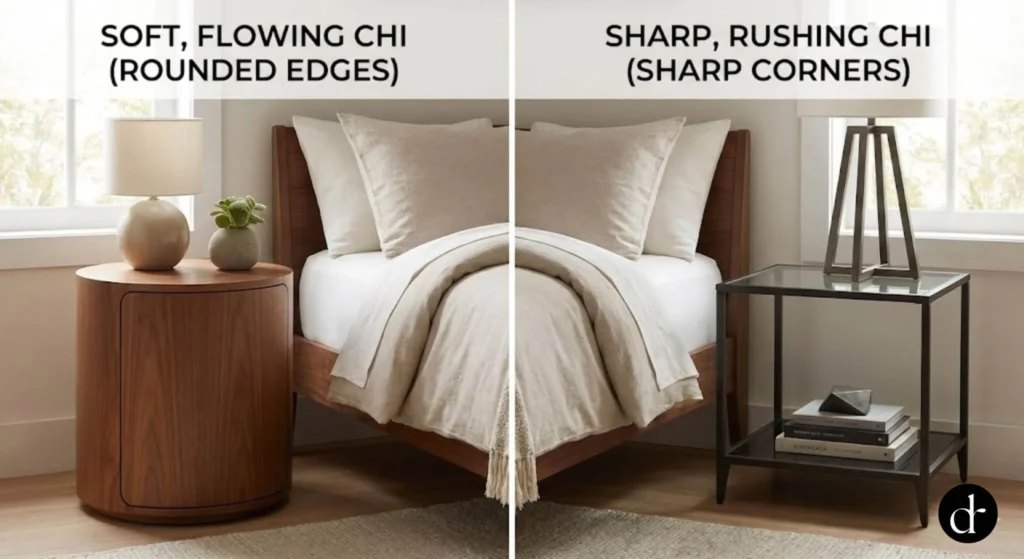
14. Round Corners on Furniture
Sharp corners on dressers or nightstands that point directly at the bed create poison arrows in feng shui.
- Why: These sharp angles direct rushing energy straight at your sleeping body, which can feel aggressive.
- Try This: Choose Rounded Edge Nightstands for Feng Shui. If you have sharp furniture, soften the corners by draping a throw blanket over them or angling them slightly away from the bed.
15. Natural Materials Priority
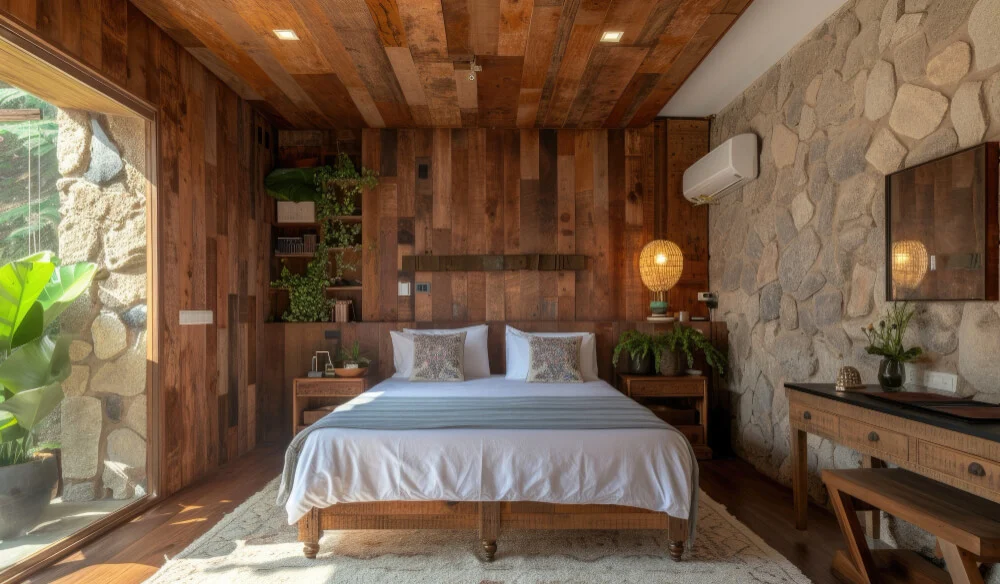
Wood, linen, cotton, wool, and silk should be the priority for positive energy placement in feng shui bedroom decor.
- Why: Natural materials carry a neutral to positive charge and breathe better. They connect you to the earth.
- Action Step: Switch to organic cotton sheets and a wooden bed frame to ground the room’s energy.
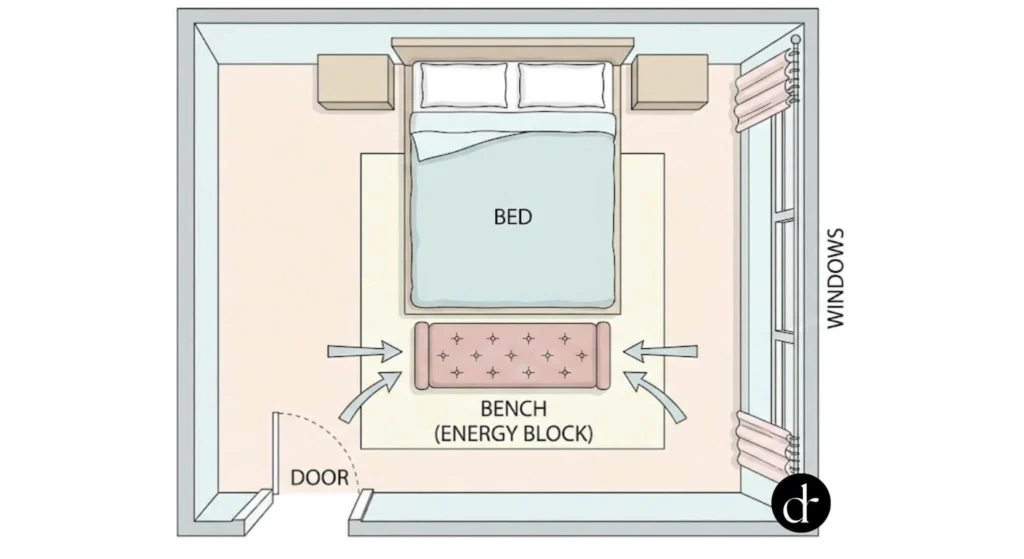
16. Bed Not in Front of Door
We touched on this, but it bears repeating as a specific feng shui rule known as the “Death Position.”
- Why: Sleeping with your feet pointing directly out the door is traditionally called the “Death Position” because that is how the deceased are carried out. Energetically, it drains your life force.
- Try This: If you have no choice, place a bench or a solid trunk at the foot of the bed to act as an energetic shield.
17. No Bed Under Window
Placing a bed in front of a window, feng shui style is generally advised against for deep rest.
- Why: During the day, light comes in (Yang). At night, your body needs protection. A window is a hole in the wall; it lacks the support and security of a solid wall. It can lead to fitful sleep and a feeling of being unsupported in life.
- Action Step: If you must place the bed there, use heavy, light-blocking curtains and a tall, solid headboard to create a “false wall.”
18. Clear Pathways/Walkways
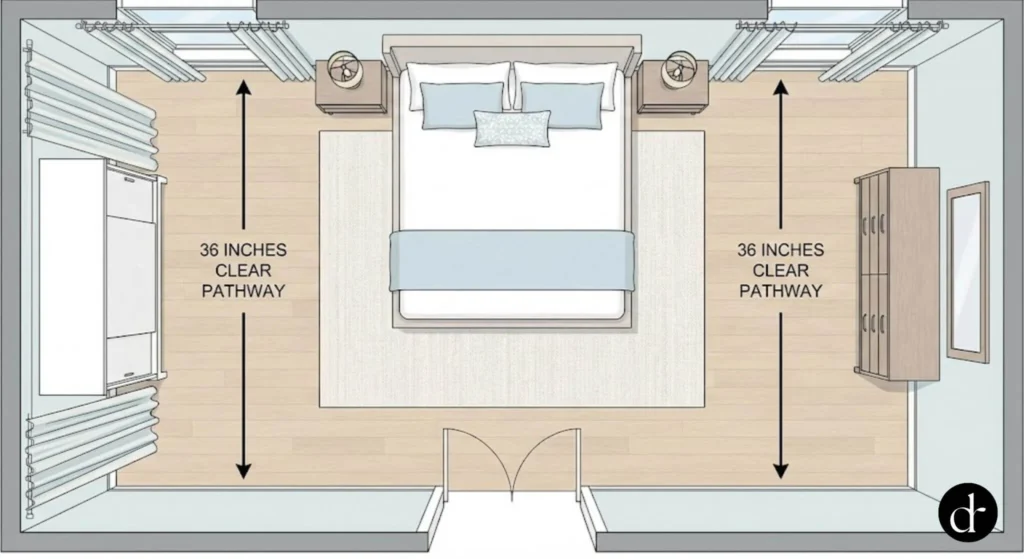
You should be able to walk around your bed and through the feng shui bedroom layout without tripping.
- Why: If you stumble in the dark, the energy stumbles too. Blocked pathways represent blocked opportunities.
- Visual Tip: Ensure there is at least 24 inches of walkway on either side of the bed.
19. Quality Bedding Materials
This isn’t just luxury; it’s feng shui decor energy.
- Why: We spend a third of our lives in bed. Old, tattered, or uncomfortable bedding creates a vibration of poverty and neglect.
- Action Step: Treat yourself to the best bedding you can afford. It signals to the universe that you value yourself and your rest.
20. Personal Kua Number Direction
Finally, refine your feng shui sleeping head direction for maximum personalization.
- Why: Once you have the basics down, you can fine-tune. For example, sleeping with your head to the north is generally considered good for stillness and insomnia. East is good for youth and ambition.
- Try this: Experiment with slight angles if your room allows, but never sacrifice the commanding position for a compass direction.

Feng Shui Bedroom Layout Examples
Understanding the rules is one thing; visualizing the bedroom feng shui layout is another. Here are three common scenarios and how to solve them.
Layout 1: The Ideal Standard Bedroom
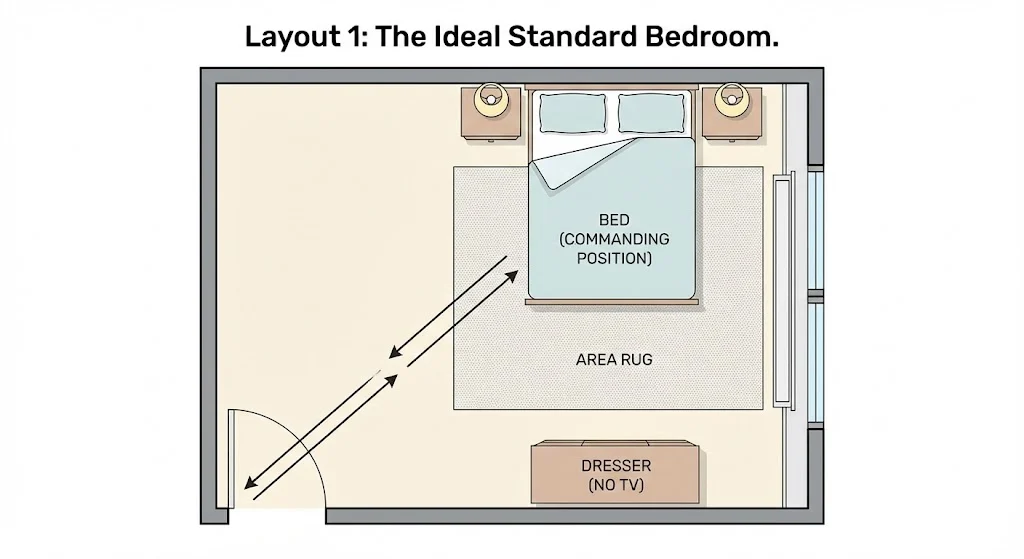
- The Setup: A rectangular room with the door in the corner.
- The Fix: Place the bed on the wall diagonal to the door. This is the classic Commanding Position. Place two matching nightstands on either side. Put a dresser on the wall opposite the bed (but not a TV!). Place a rug that anchors the bottom two-thirds of the bed.
- Why it works: It offers maximum stability and clear sightlines.
Layout 2: The Small Bedroom (Apartment Living)
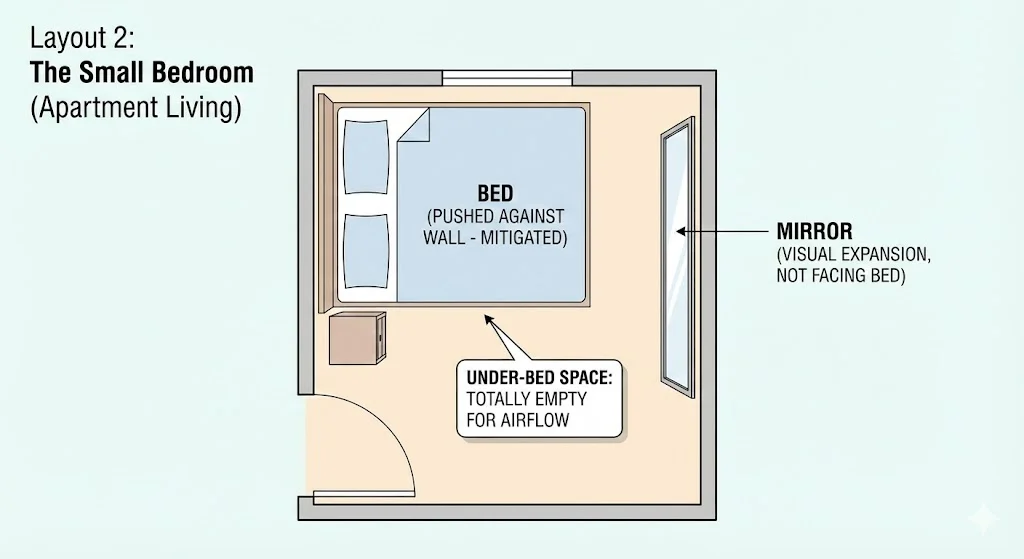
- The Setup: A tight square where the bed barely fits.
- The Fix: You might have to push one side of the bed against a wall. This is often a bad feng shui bedroom trait, but we can mitigate it. Place a mirror on the wall next to the bed (not facing it) to visually expand the space. Ensure the space under the bed is totally empty to maximize airflow in the tight room.
- Why it works: It prioritizes the “open feel” over strict rules.
Layout 3: The Studio Apartment
- The Setup: Living, working, and sleeping in one box.
- The Fix: Zoning is essential. Use a bookshelf or a folding screen to create a “bedroom” area. Orient the bed so you are not looking at the kitchen (fire element) or the front door while sleeping.
- Why it works: It creates a psychological boundary between “active” and “rest” zones.
Manual Feng Shui Bedroom Layout Generator
Feng shui bedroom layout generator: Don’t rely on apps that can’t see your specific obstacles. Use this 5-step manual process to map your room:
- Map the Door: Stand at your bedroom door looking in. This is the “mouth of Chi.”
- Locate the Power Spot: Find the corner diagonally opposite the door. This is usually the best spot for your bed.
- Check for Arrows: Look for sharp corners pointing at that spot. If they exist, move the spot or buffer the corners.
- Place the Bed: Draw your bed in that spot. Ensure the headboard is against a wall.
- Layer the Rest: Add nightstands, then lighting, then rugs. Add larger furniture (dressers) last, ensuring they don’t block the path from the door to the bed.
Colors, Decor & Things to Put in Your Feng Shui Bedroom
Once the furniture is placed, the feng shui decor brings the energy to life.
The Best Feng Shui for Bedroom Colors
As mentioned, avoid high-contrast, aggressive colors.
- Skin Tones: From pale porcelain to rich mahogany. These are nurturing.
- Soft Blues/Greens: Healing and calm (wood and water elements), but ensure they aren’t too “cold.”
- Pinks: Associated with the Southwest area of the Bagua map (Love & Relationships). Gentle pops of pink or peach can invite romance.
Decor Dos and Don’ts
- DO: Use soft lighting. Harsh overhead lights are aggressive. Use warm-toned lamps on nightstands.
- DO: Incorporate artwork that inspires you. If you want to travel, hang a landscape. If you want love, hang a picture of a couple.
- DON’T: Hang heavy artwork directly over the headboard. It creates subconscious anxiety about things falling on you.
- DON’T: Keep water features (fountains/aquariums) in the bedroom. Water is too active and can lead to financial loss or cooling of passion in the bedroom.
Pro Tip: Looking for the perfect accent? Try a Soft Woven Area Rug to ground the energy at the foot of your bed.
FAQ: Feng Shui Bedroom Positive Energy Questions
Here are the most common questions we get about how to feng shui your bedroom.
My bed has to be in front of a window. Is my feng shui ruined?
Not at all. While a bed in front of a window isn’t ideal feng shui, you can cure it. Use a very sturdy, high headboard to create a false wall, and keep thick curtains closed at night to provide that sense of backing support.
What if I share a wall with a bathroom?
In feng shui rules, having your headboard against a wall shared with a toilet is bad luck (draining energy). If you can’t move the bed, place a mirror on the wall behind the bed (facing into the room) to “push” the bathroom energy away.
How do I feng shui a small bedroom?
Focus on small bedroom feng shui bedroom layout principles: Declutter ruthlessly, use vertical space for storage (not under the bed), and use light colors to keep the Chi from feeling compressed.
What is the best bed direction for money?
Generally, the southeast corner of the room is the “wealth corner.” While you shouldn’t necessarily sleep in the corner, placing a healthy plant or a small citrine crystal in the Southeast area of your bedroom can activate wealth energy.
Can I have books in the bedroom?
A fiction book on the nightstand is fine. However, floor-to-ceiling bookshelves can feel heavy and oppressive, and nonfiction/reference books can stimulate the “working” brain too much.
Does the material of the bed frame matter?
Yes. Wood is the best, as it is neutral and natural. Metal can conduct electricity and magnetic fields, potentially disrupting sensitive sleepers.
